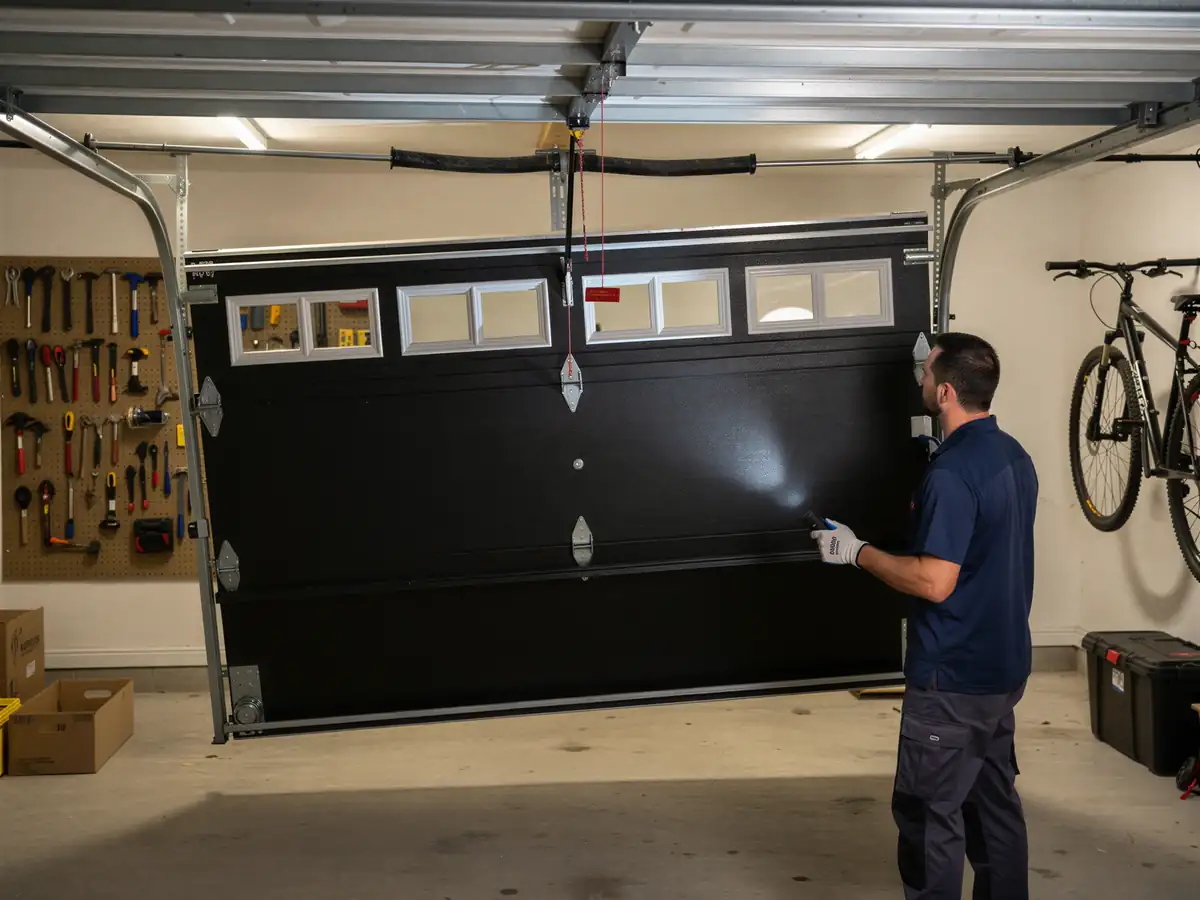
How It Shows Up
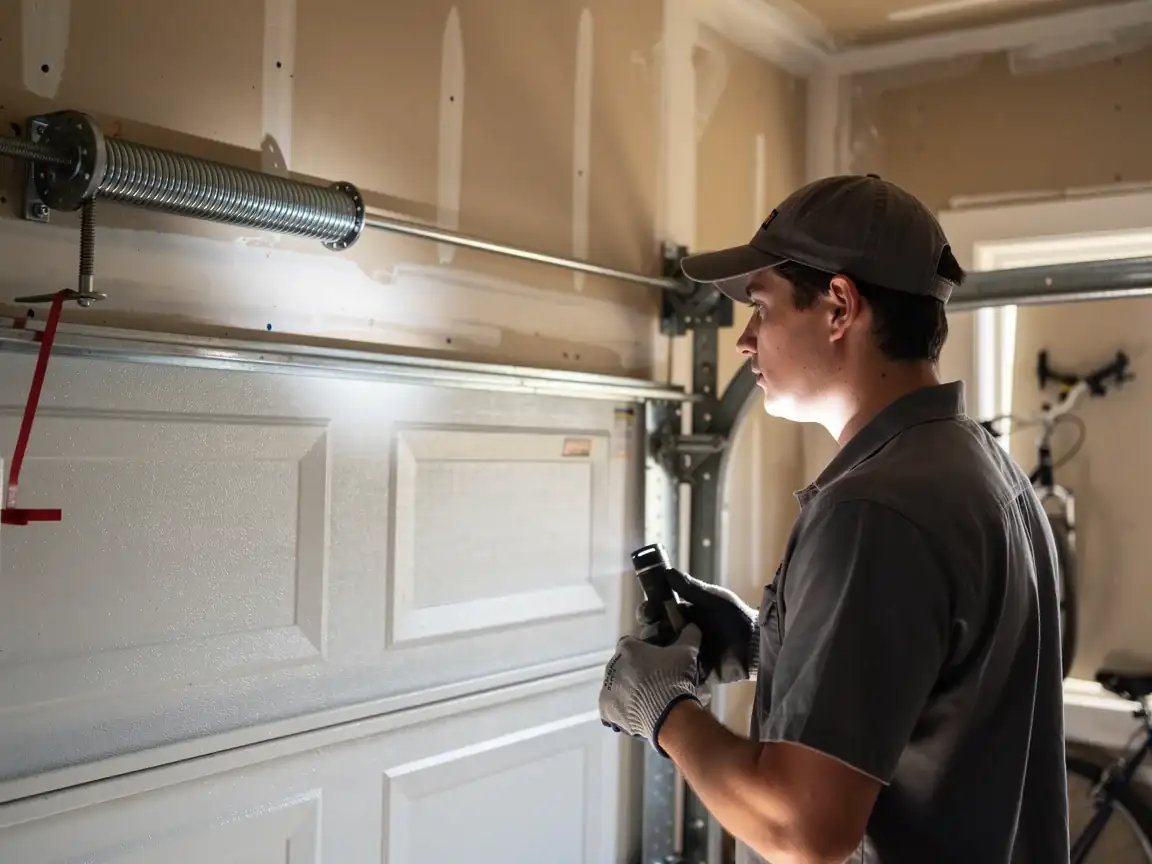
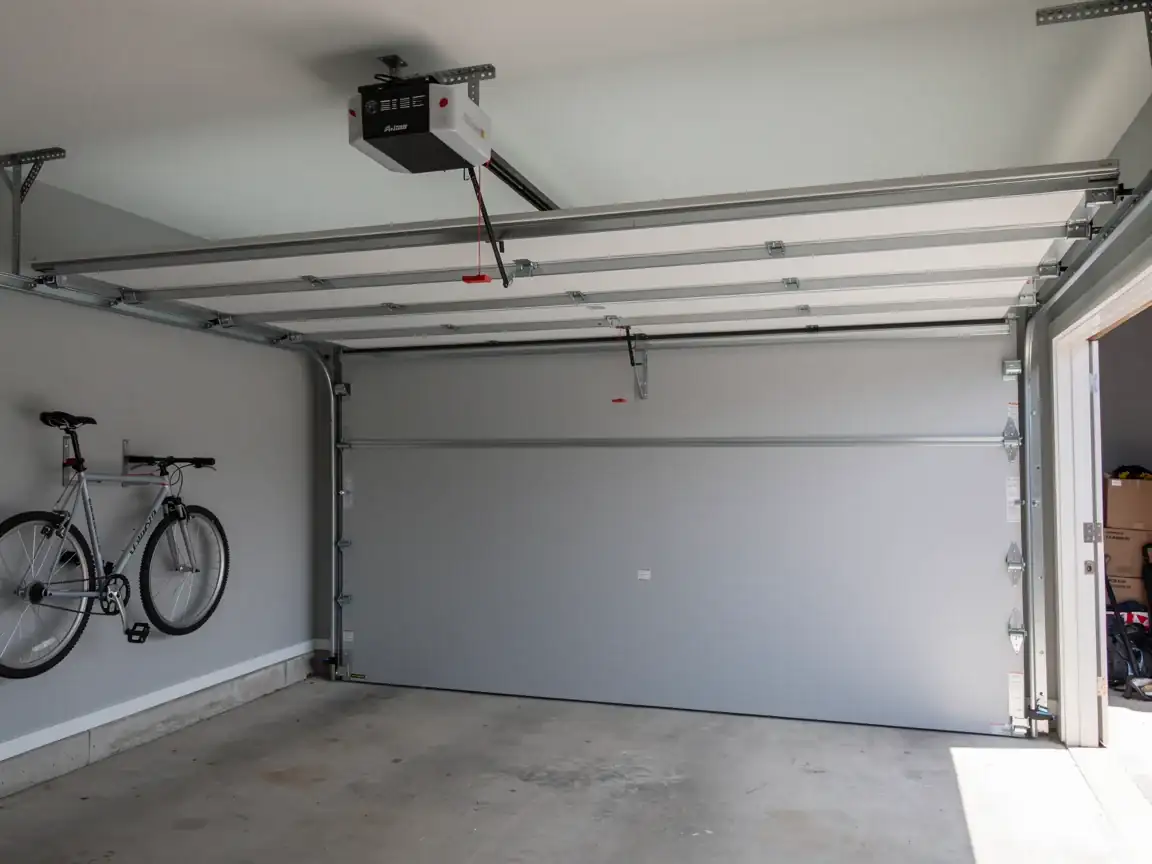
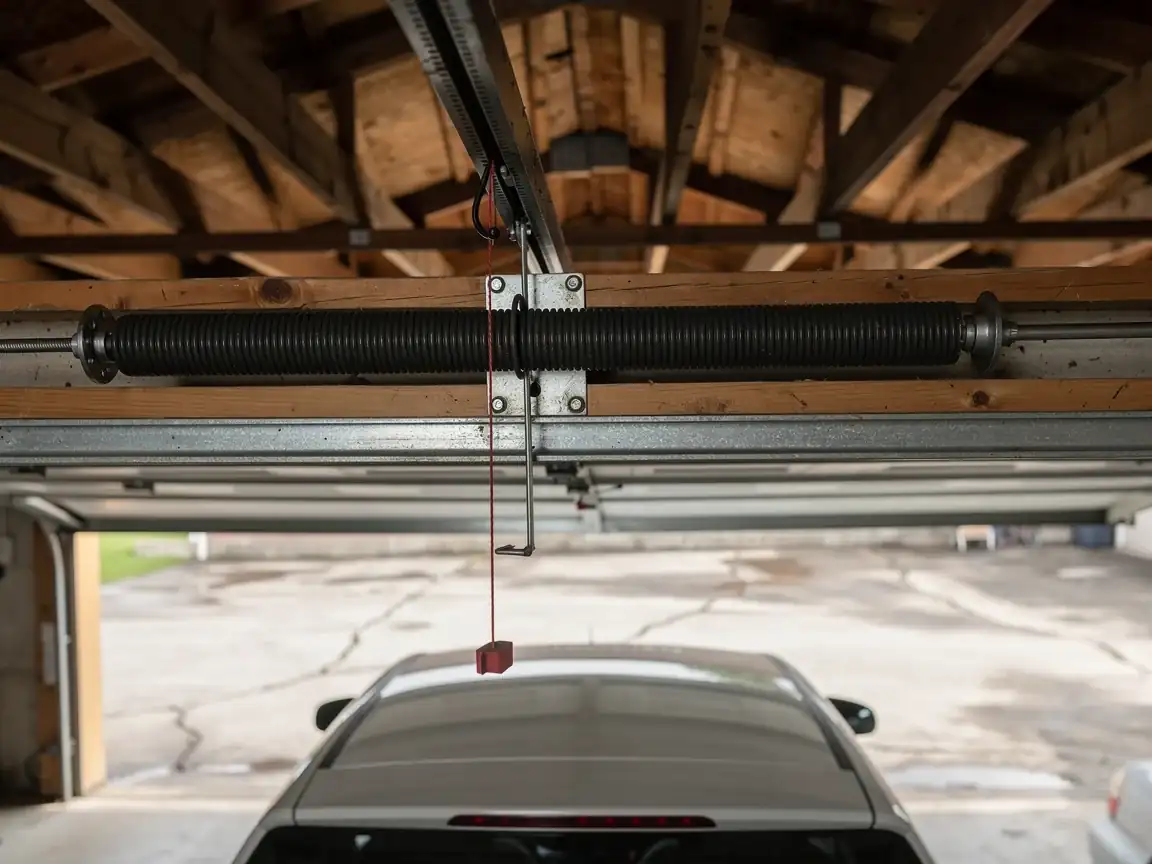
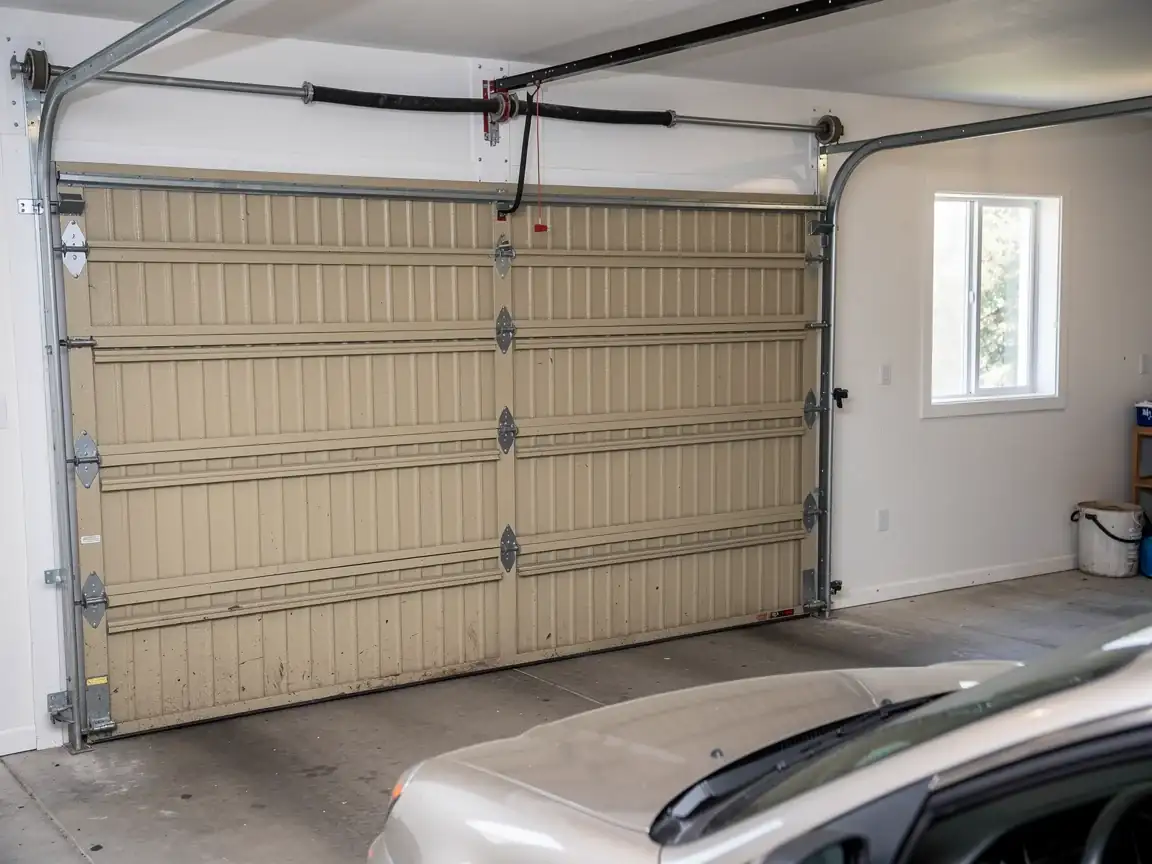
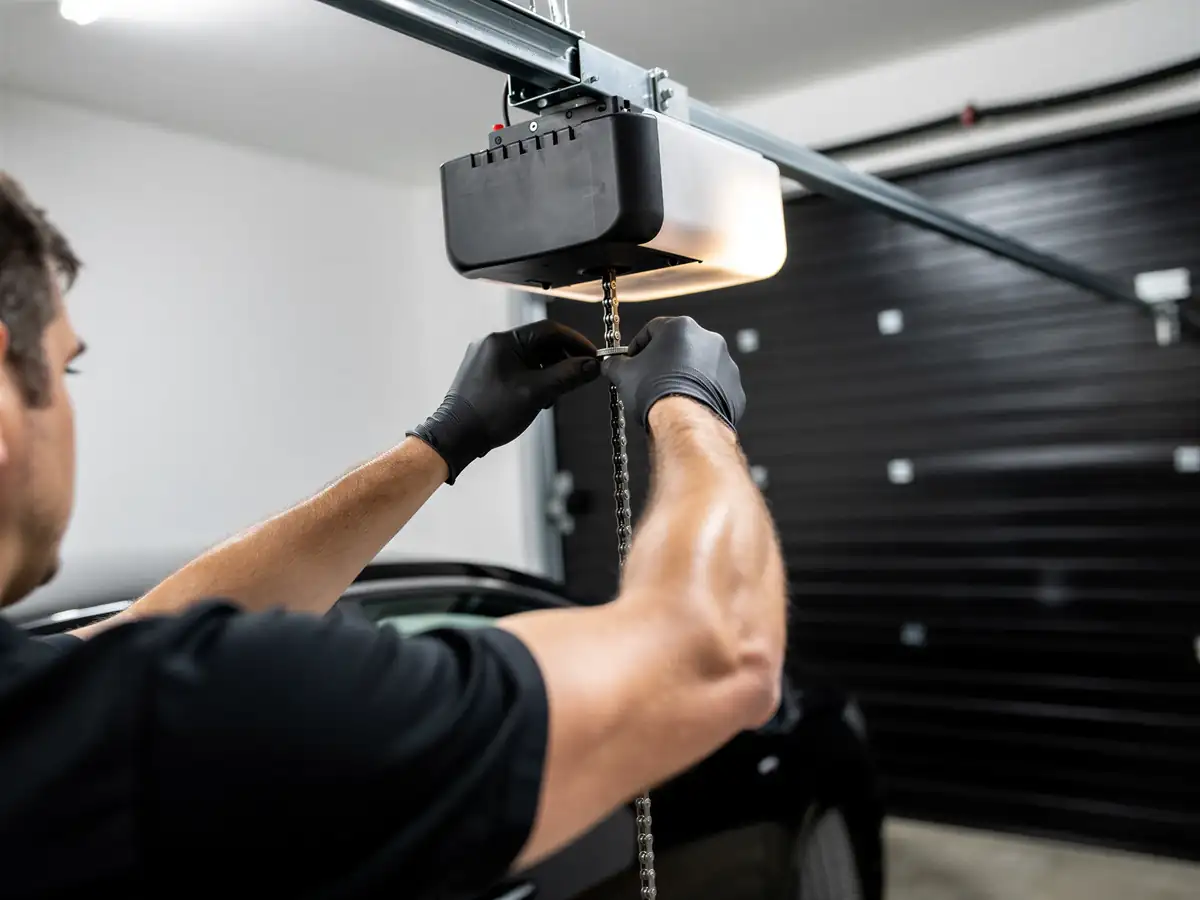
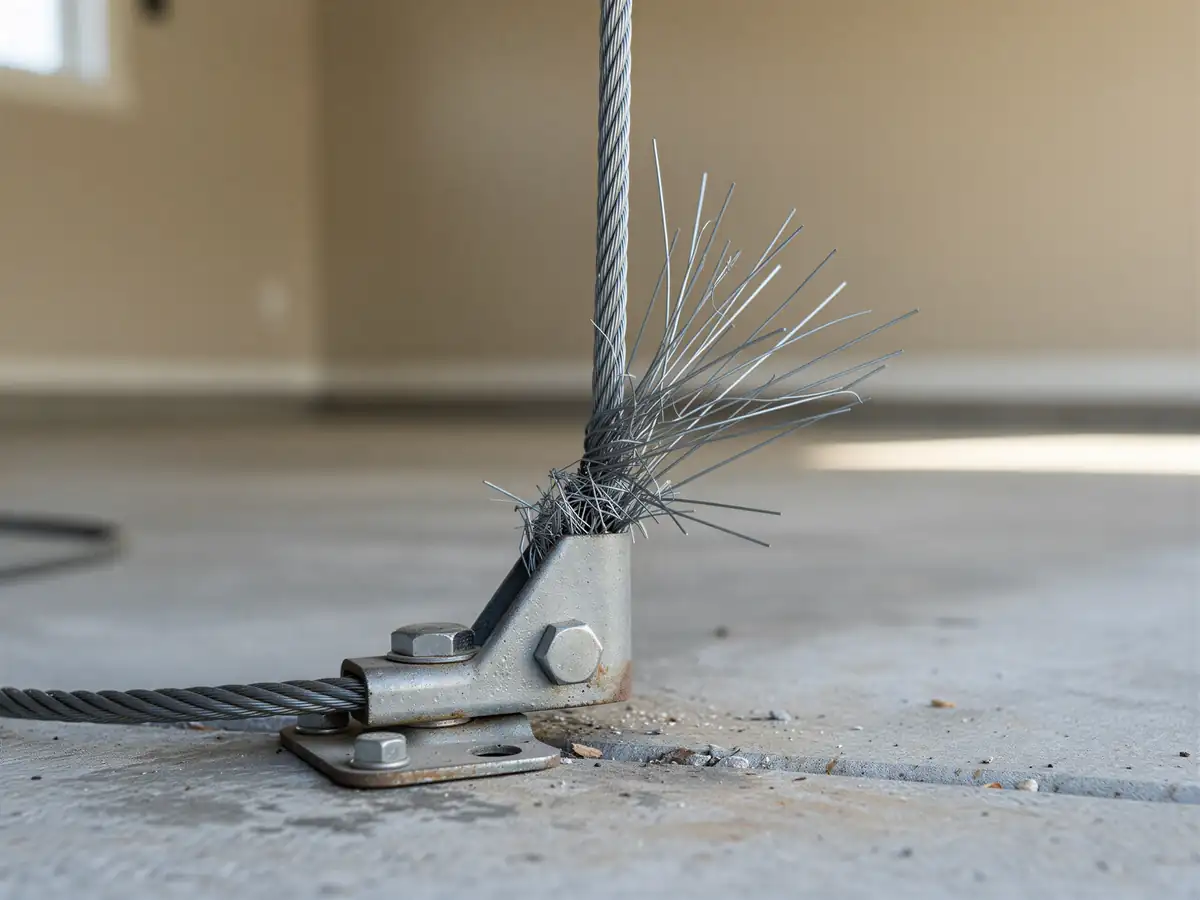
The most common version: one side of the door hangs lower than the other when it's two-thirds up, and you can see daylight between the roller and the track on that side. Sometimes it's quieter - a grinding or scraping noise right before the door reaches full open, which is the roller catching the lip of a track section that's pulled away from the wall. On torsion-spring doors from this era, a derailed cable at the bottom bracket will often look like the door simply won't lift evenly, which gets mistaken for a spring problem. If the opener is still trying to pull a door that's off-track, you'll hear the motor strain and the chain or screw drive click without the door moving the last few inches. Any of these is a reason to stop running the opener - running a motor against jammed track is how a bent section turns into a track that has to be replaced instead of repaired.
What the Repair Takes
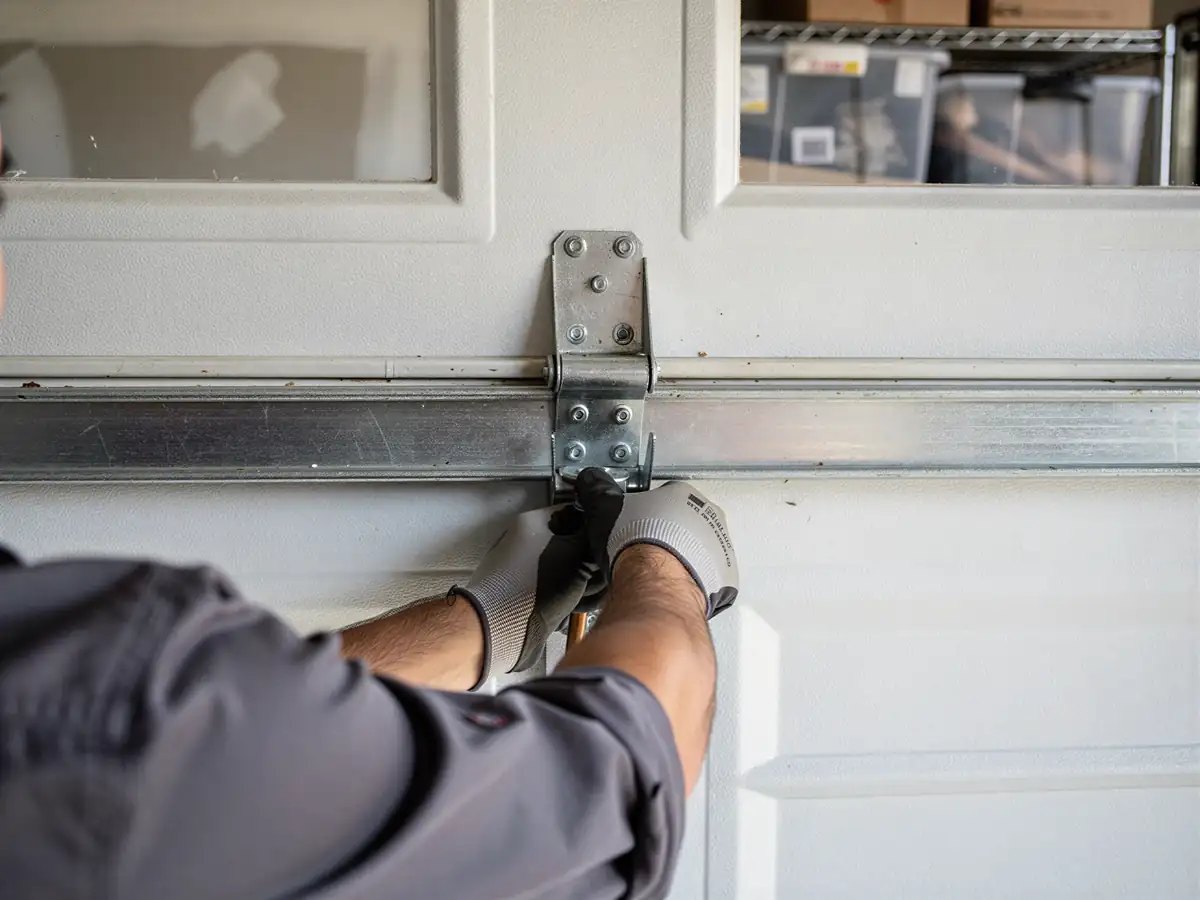
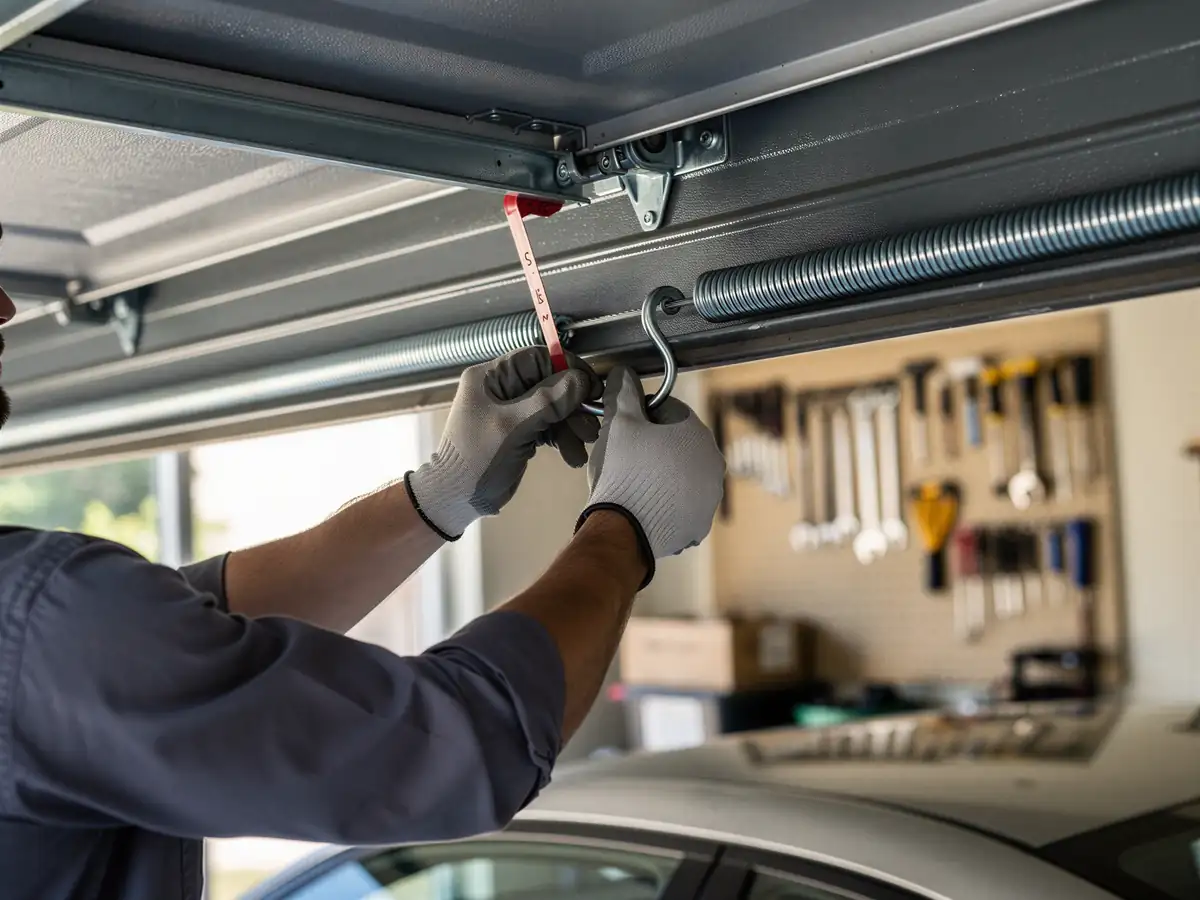
First step is always releasing tension safely and getting the door back into the track by hand, not by running the opener. From there it's a matter of degree. If the track is just knocked out of alignment, the fix is re-squaring it against the jamb and re-torquing the lag bolts into solid framing - on a 1979-era house that often means finding new wood, since the original holes have worked loose. If a bracket has bent or a section of track is visibly kinked, that section gets swapped rather than hammered straight, because a track that's been bent once will bend again at the same spot. Cold-severe winters make this work less forgiving: galvanized steel contracts in low temperatures, so a track that's borderline loose in October can be fully off its line by January. We check both tracks and all roller brackets while we're in there, not just the side that failed, since the other side is usually the same age and under the same stress.
Can You Do This Yourself
Re-seating a roller that's just barely nudged out of the channel, with the door down and the opener disconnected, is within reach for most owners - it's a matter of guiding it back in by hand with no tension on the system. Past that, stop. A torsion spring holds real force, and a door that's cocked in the track is already fighting that force unevenly, which is exactly the setup that causes a cable to snap or a section to drop. If the door won't move freely by hand with the opener disconnected, or if you can see a bent track rather than just a loose one, that's a call, not a weekend project. We'd rather talk you out of a repair that isn't worth attempting than have you finish the job we get called for anyway, with a hand injury added to it.
How Long You Are Without the Door
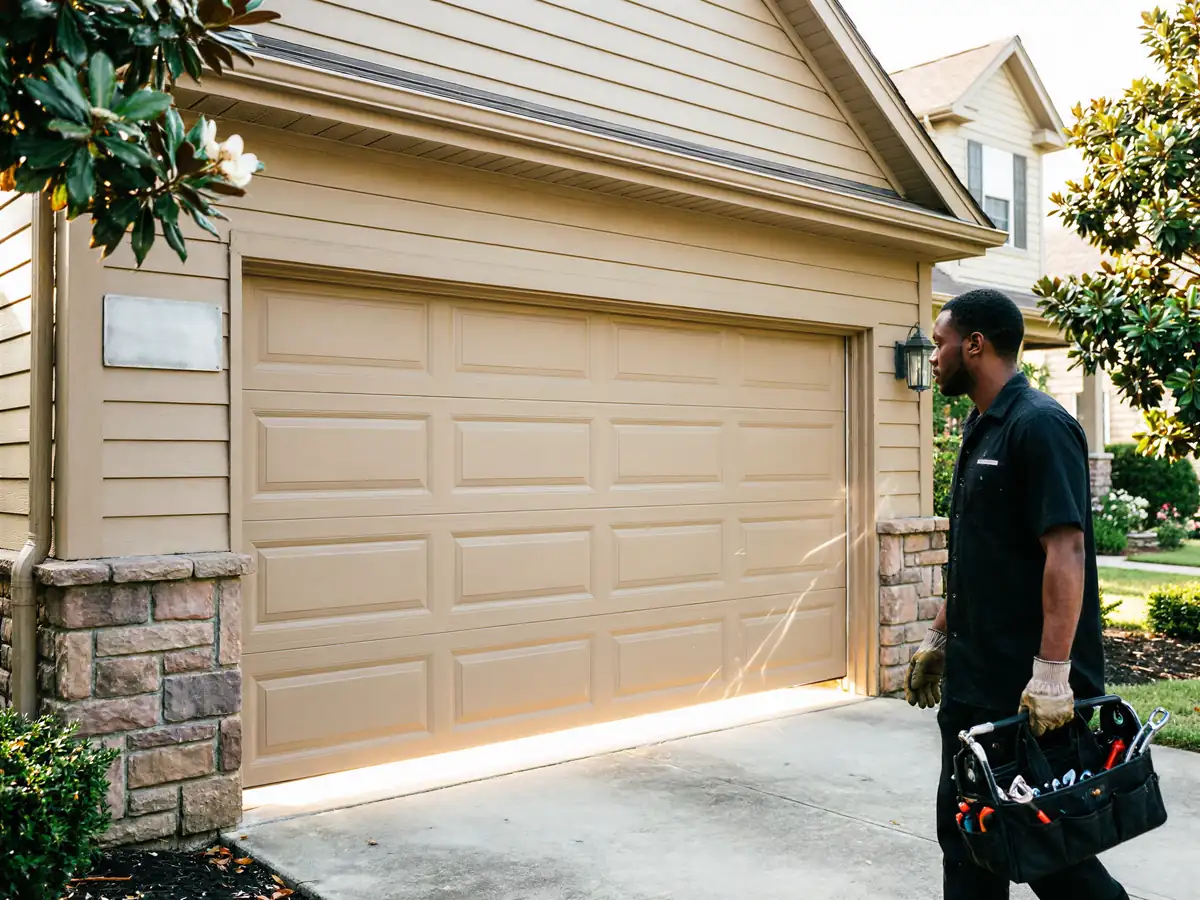
We run this out of Arlington, about 11 miles from Burke - farther than the closer stops like Bailey's Crossroads or Falls Church, which affects when we can get to you more than it affects the repair itself once we're there. A straightforward re-track, where the hardware just needs realigning and re-bolting, is usually finished in one visit. A bent track section or a bracket that's torn out of rotted framing takes longer, since that framing repair has to be solid before the track goes back up - rushing it just means another off-track call a year later. We won't promise a same-day window here, since that depends on the drive and what's ahead of you on the schedule, but we will tell you honestly, before we start, whether you're looking at one visit or two.