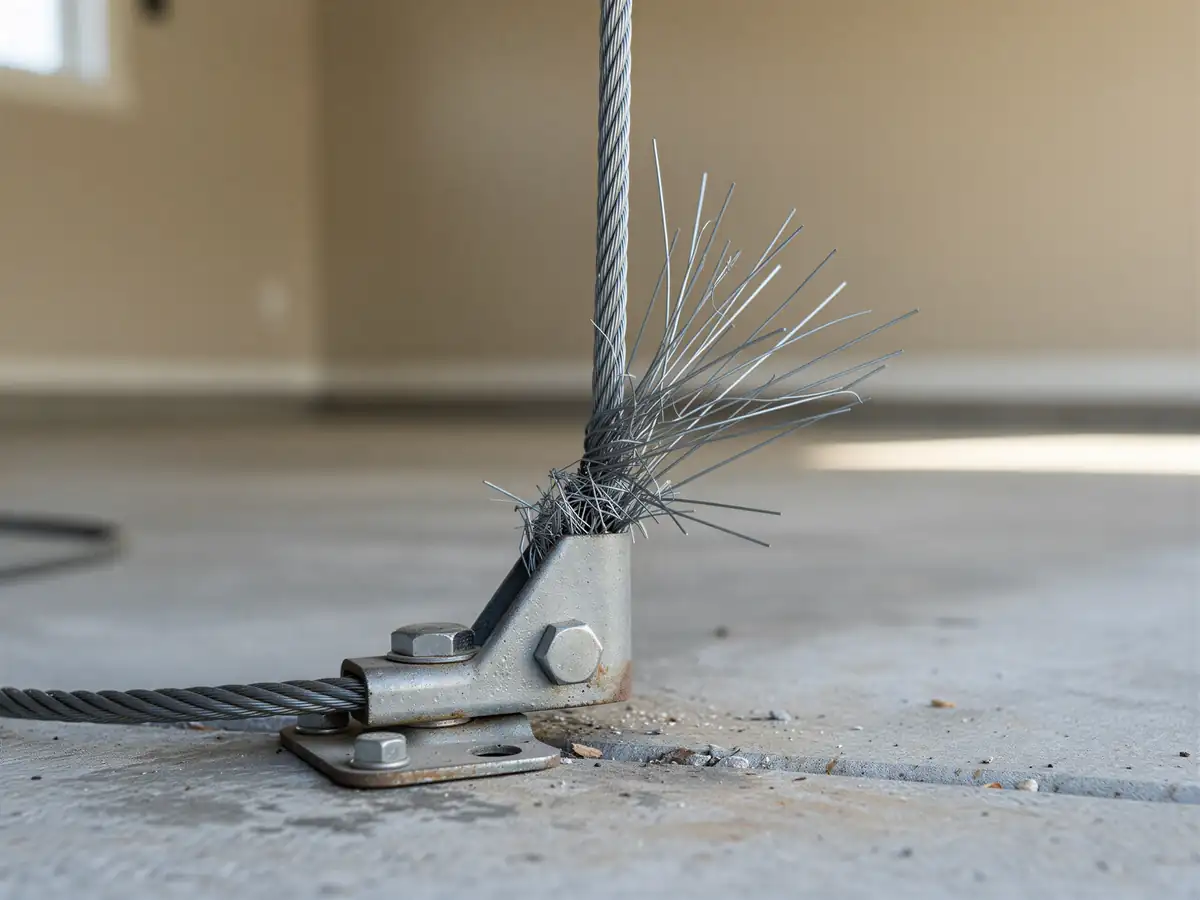
What Can Go Wrong
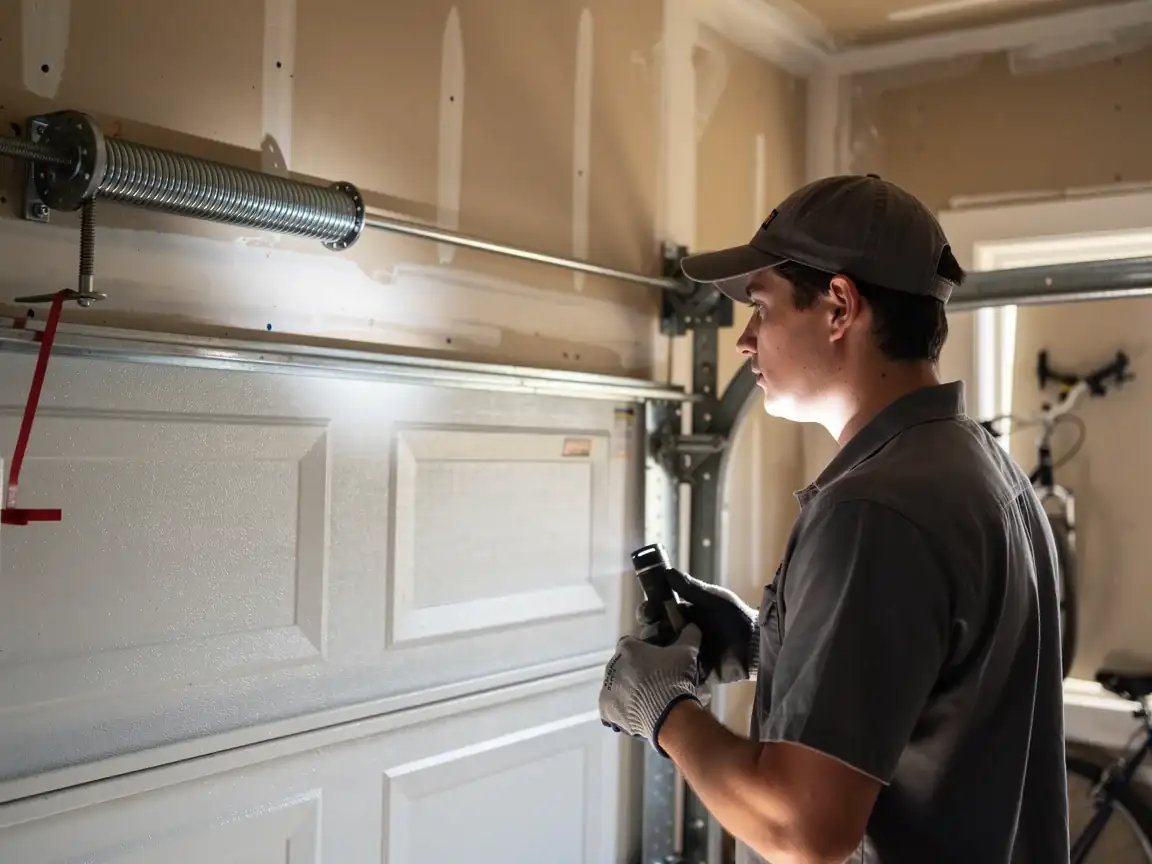
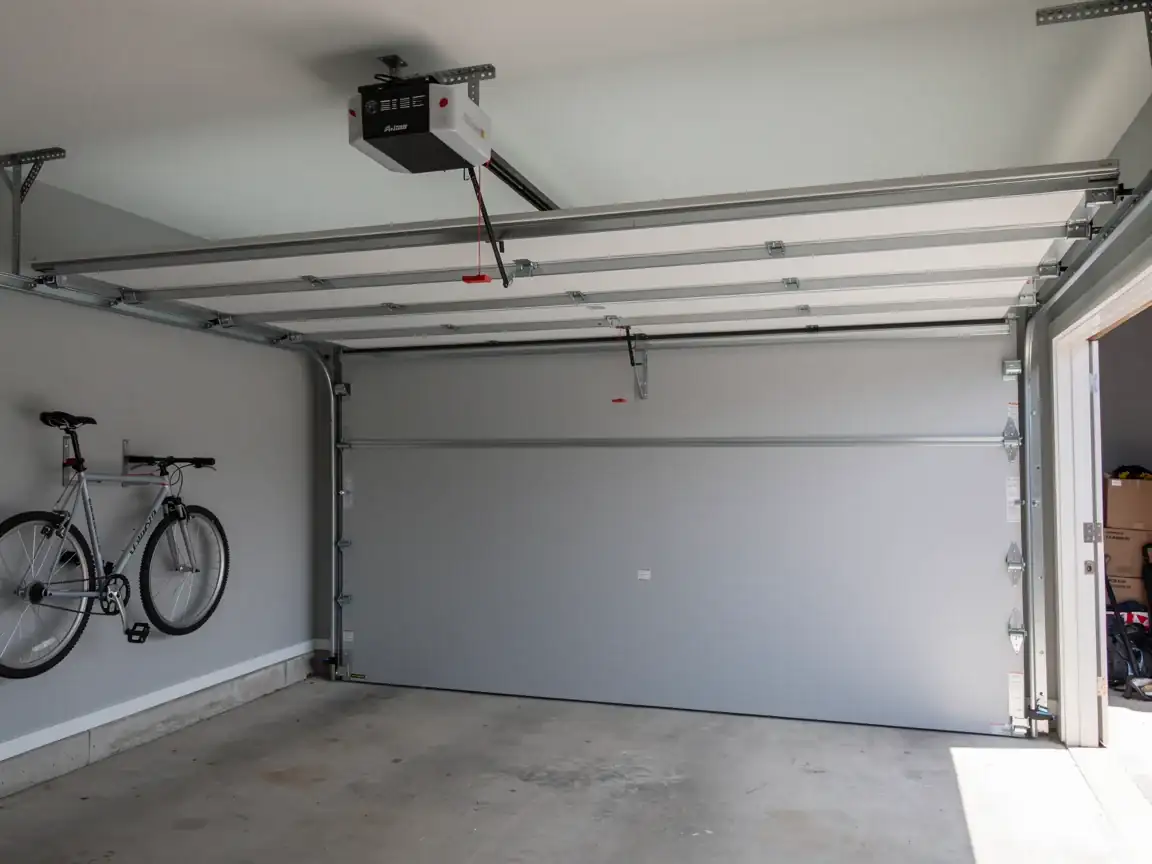
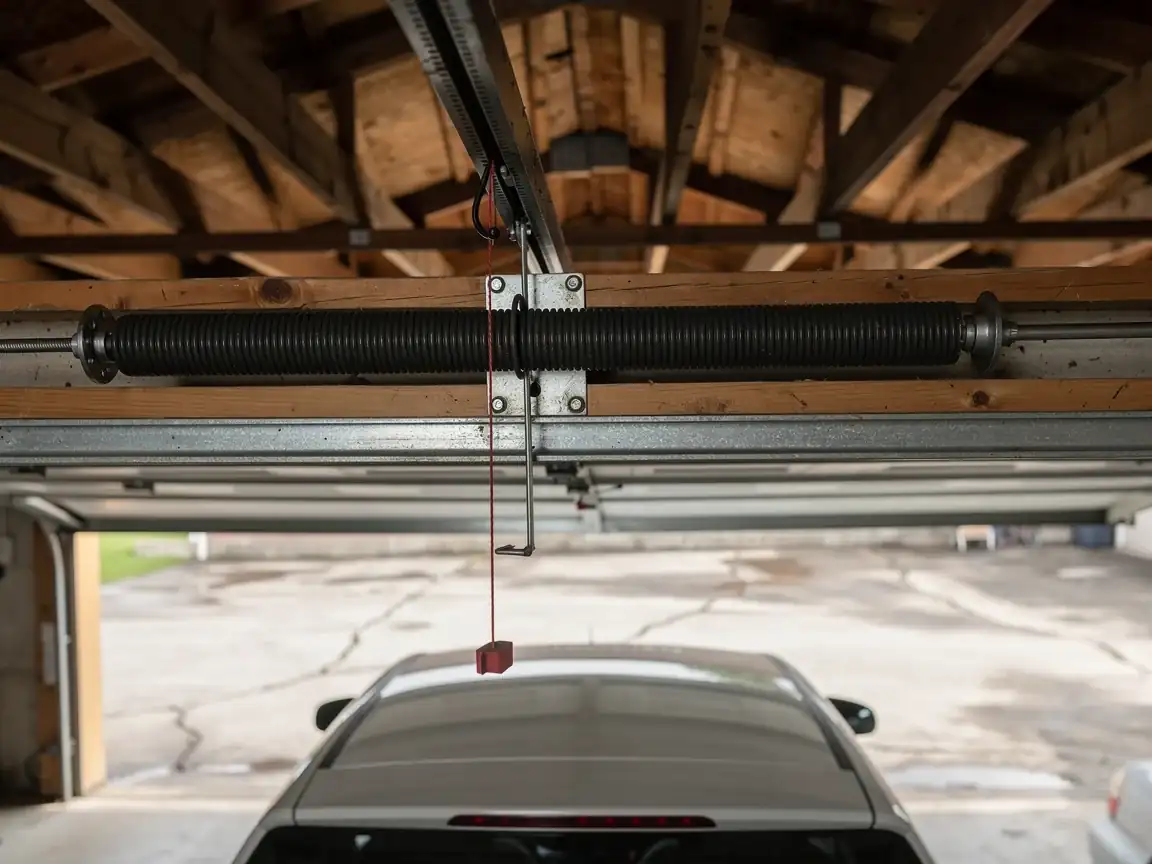
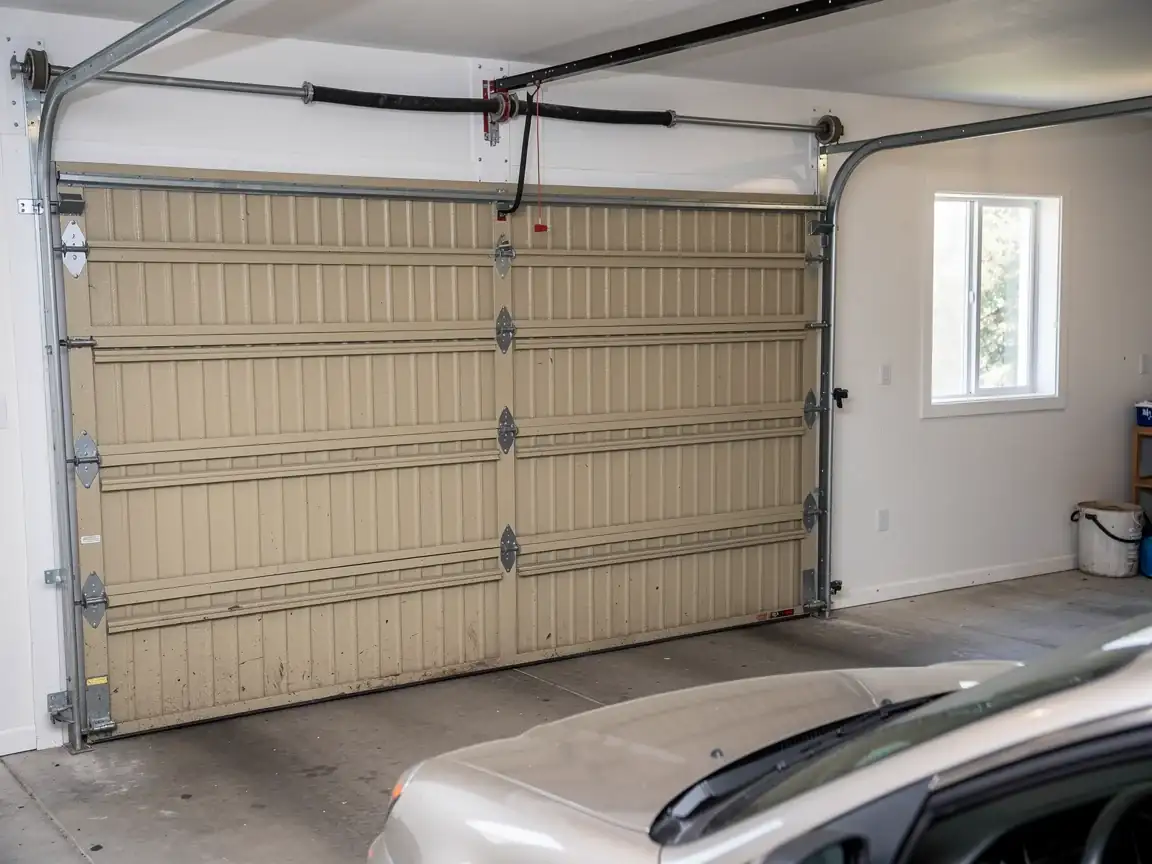
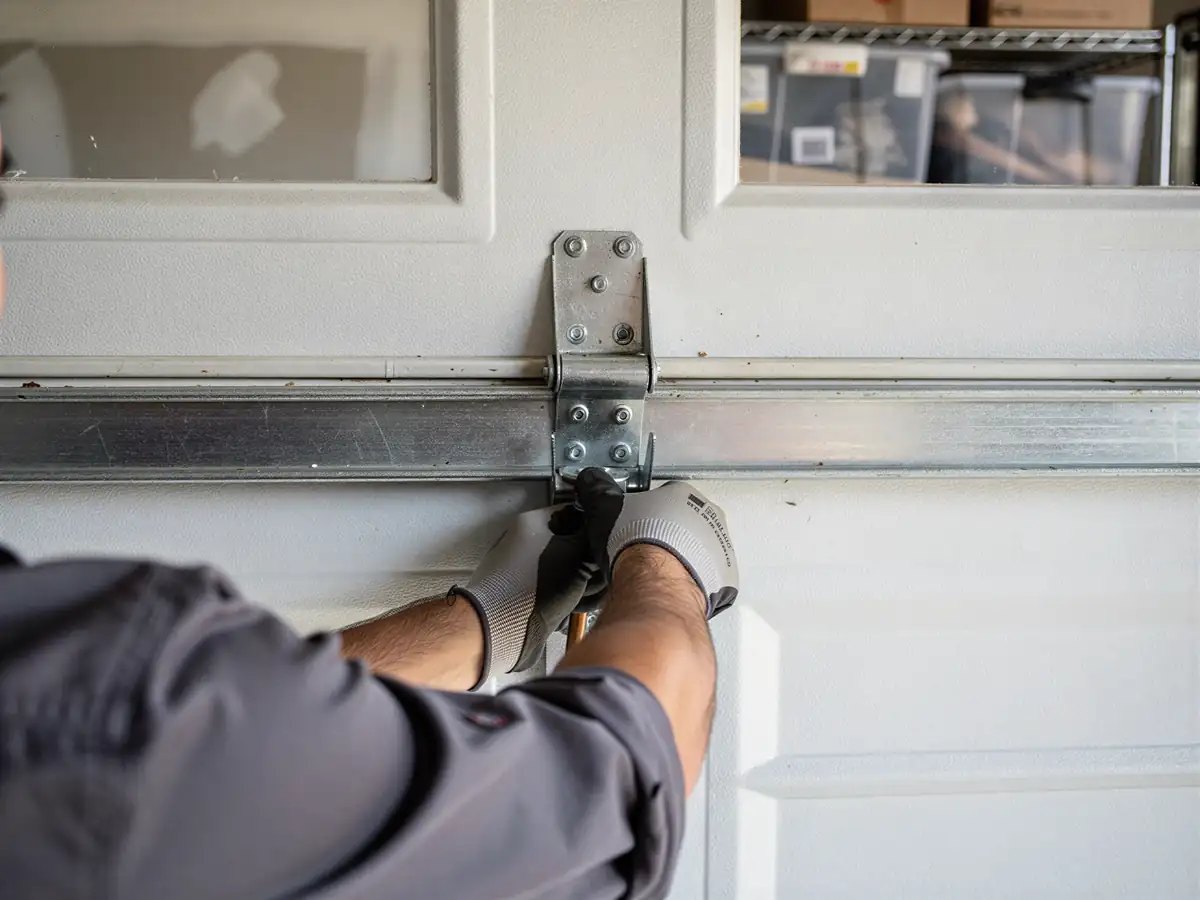
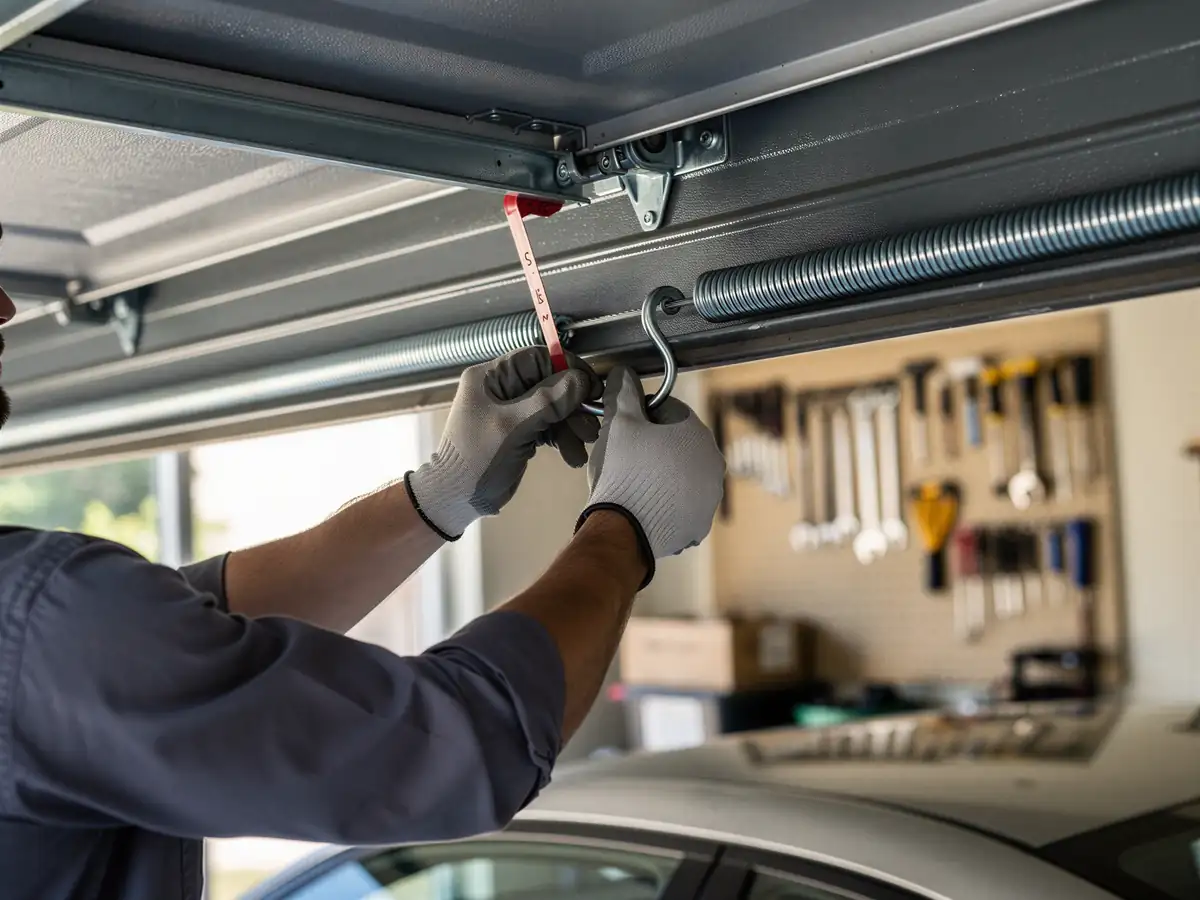
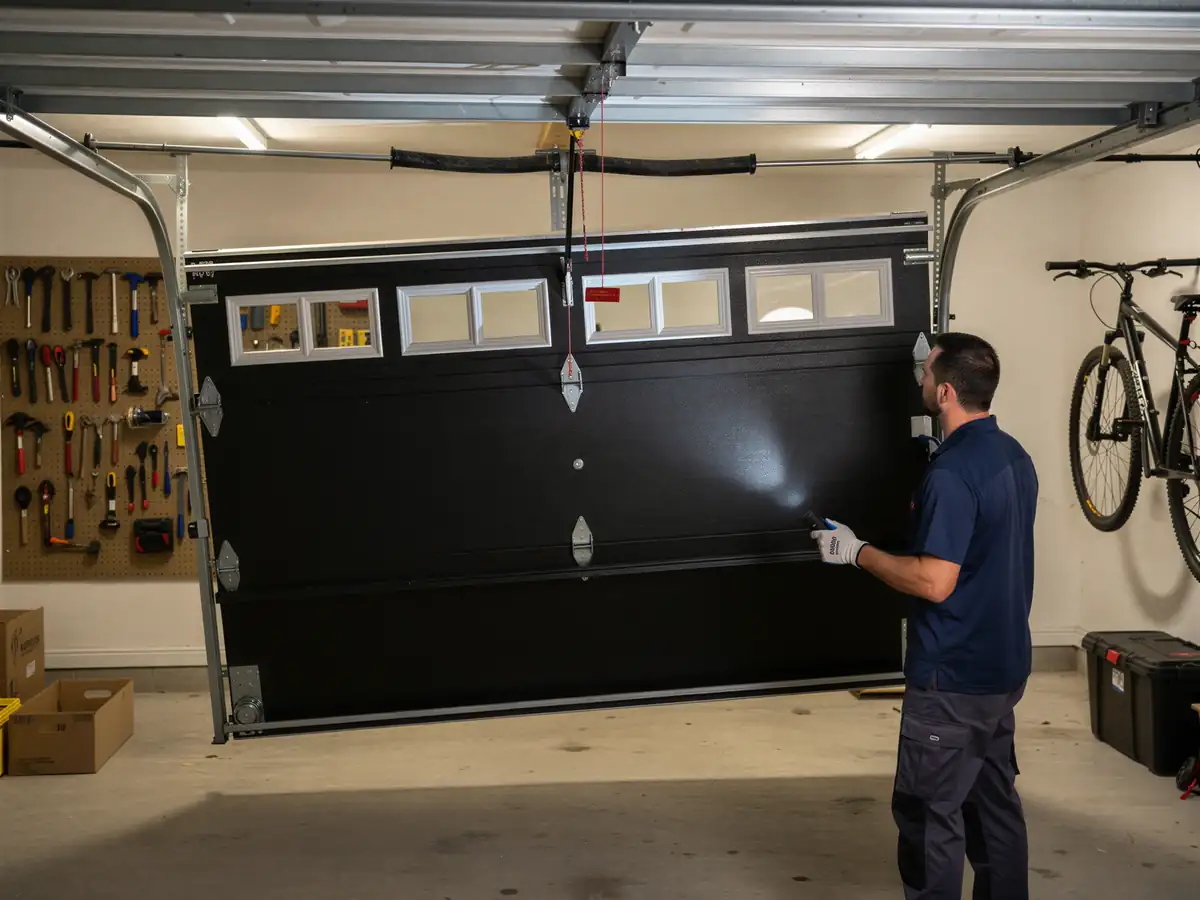
West Falls Church's housing stock centers on 1962, which puts a good share of these garages at roughly 60 years on their original lift hardware. Cables don't get swapped out on a schedule the way openers sometimes do - they just wear, strand by strand, against the drum groove until one gives. On a lot of these doors the cable, drum, and even the original stationary cone are the parts that have never been touched since the house went up. That's not a guess about one house; it's what you'd expect from a block built in the early 1960s and never flagged for a hardware upgrade. Add in the region's cold-severe winter swings and the steel cable contracts and expands enough, year over year, to accelerate fraying at the drum end. The usual failure here is a frayed cable at the bottom bracket or a cable that's jumped its drum from rust buildup - less often a clean snap, more often a slow give that finally lets go.
What You Pay
We don't have a flat number to quote in writing without seeing the door, so we won't make one up for this page. What we can tell you is that cable repair on original 1962-era hardware sometimes turns into more than a cable swap - if the drums are pitted or the stationary cones are worn, replacing cable alone just buys you a few more months before the next call. We'll always tell you straight if that's what we're looking at before we start charging for parts. For the general service rates that apply across the territory, the cable repair page for Arlington covers that in more detail.