How Long You Are Without the Door
We don't keep a crew stationed in Great Falls
The job comes from our Arlington shop, roughly 14 miles out, farther than closer parts of the service area like Bailey's Crossroads at 3 miles at 1 mile NNW. That distance is part of why we schedule the visit rather than promise a same-hour arrival - we'd be making that promise from across the county, not from around the corner.
What that means for you day to day
If one roller has popped the track but the door still closes by hand, you can usually leave it alone overnight and park on the street or in the driveway until the appointment. If the door is jammed half-open, or a cable has come off the drum along with the track problem, don't force the opener - that's how a bent track turns into a bent track plus a cracked panel. Great Falls is a smaller market for us at around 4,970 households, against roughly 254,635 across the full service area, so we're not rolling through daily. Plan the appointment, don't wait on a walk-in.
- 4,970 households
What the Repair Takes
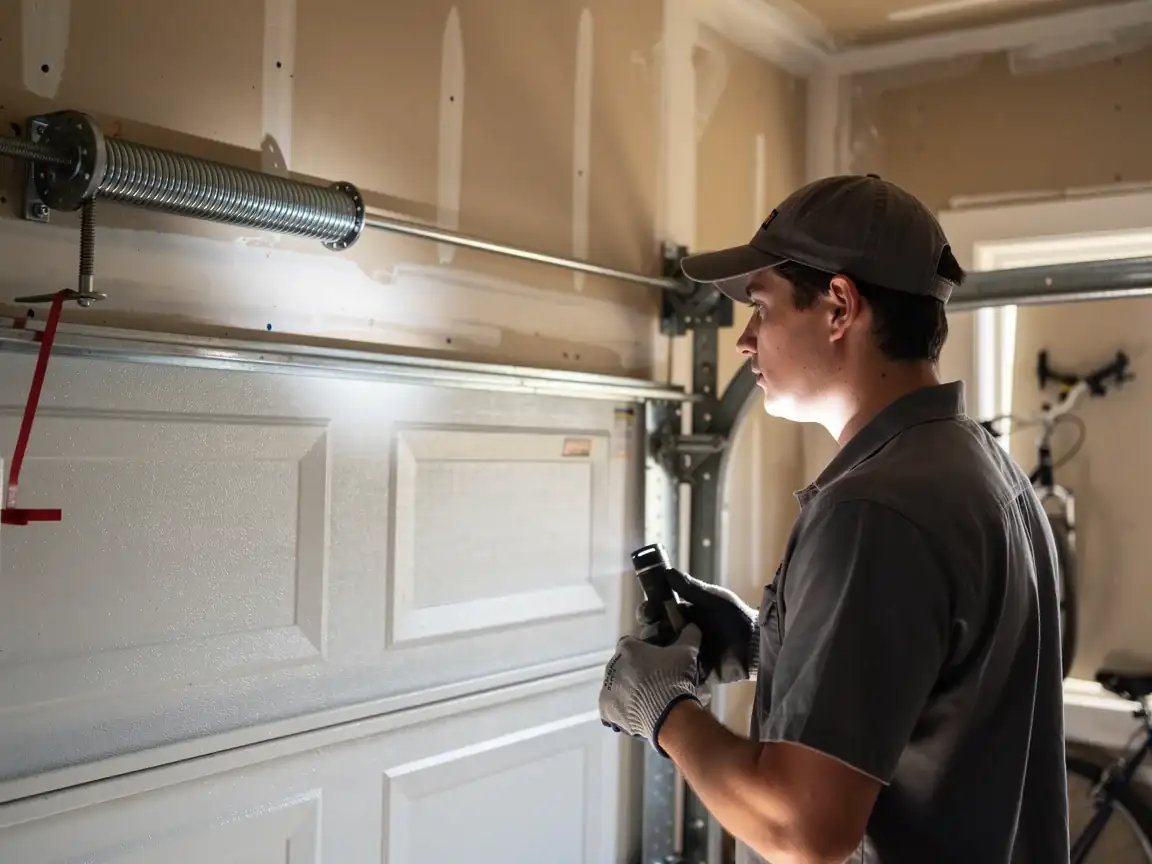
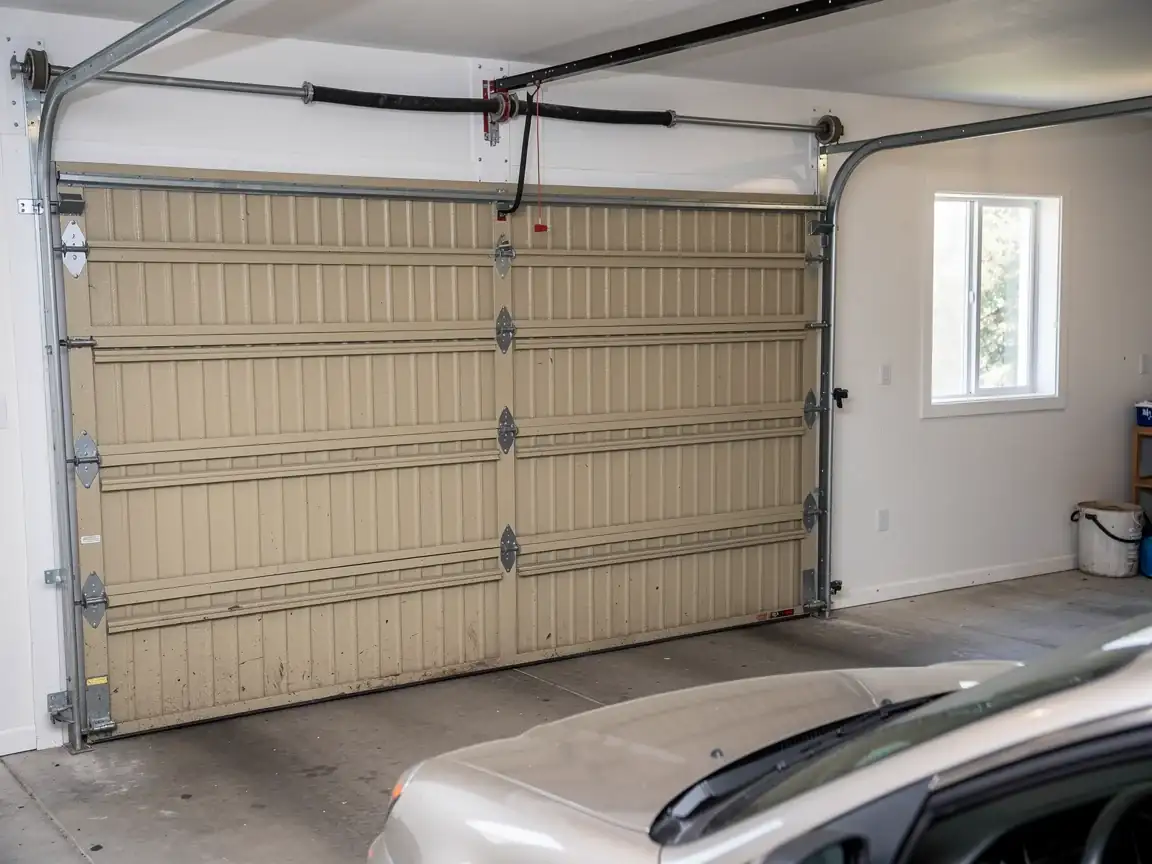
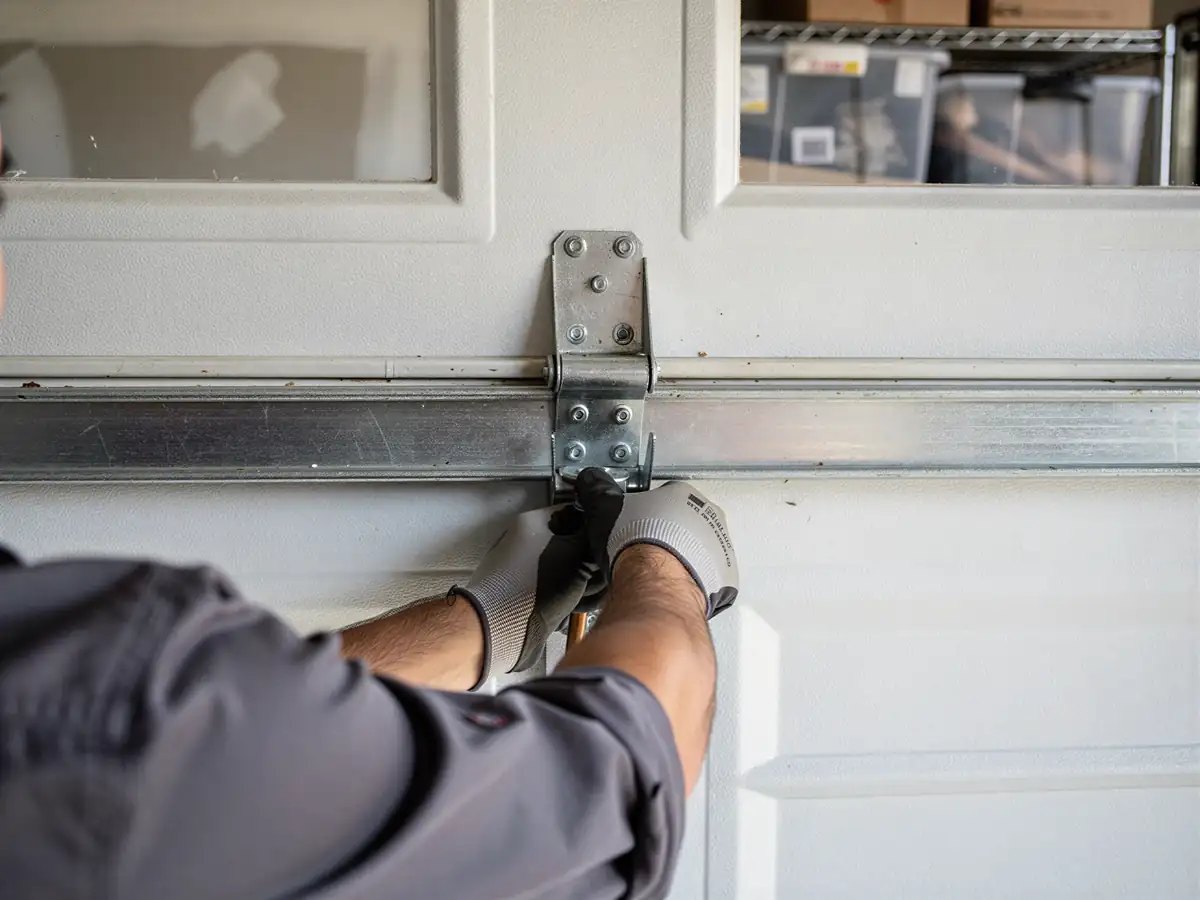
Houses here were mostly built around 1985, well past the service area's broader 1940-to-2001 range with its median near 1976. That later build year matters: a Great Falls door is almost always a steel sectional running on galvanized track with nylon rollers and factory hinges, not the older steel-wheel hardware you'd find on an original one-piece door from the area's earliest postwar sections. Parts for this generation are common, which keeps the repair straightforward in most cases - realign the track, swap the bent section if there's a kink, replace the roller that jumped.
The honest limit: if the track is bent rather than just knocked loose, we don't try to hammer it back true. A bent section gets replaced, because a track that's been forced straight again will throw the roller a second time, usually within months. That's a parts-and-labor job, not a five-minute fix, and we'll tell you that on-site rather than promise a quick patch that won't hold.
How It Shows Up
The service area sits in a cold-and-severe climate band, and freeze-thaw cycling is the usual culprit behind a track working loose at the brackets over a few winters - the metal expands and contracts, the lag screws back out a little each season, and eventually a roller has just enough play to ride up and over the track lip. You'll hear it before you see it: a grinding or scraping sound as the door travels, then a hard stop partway up or down.
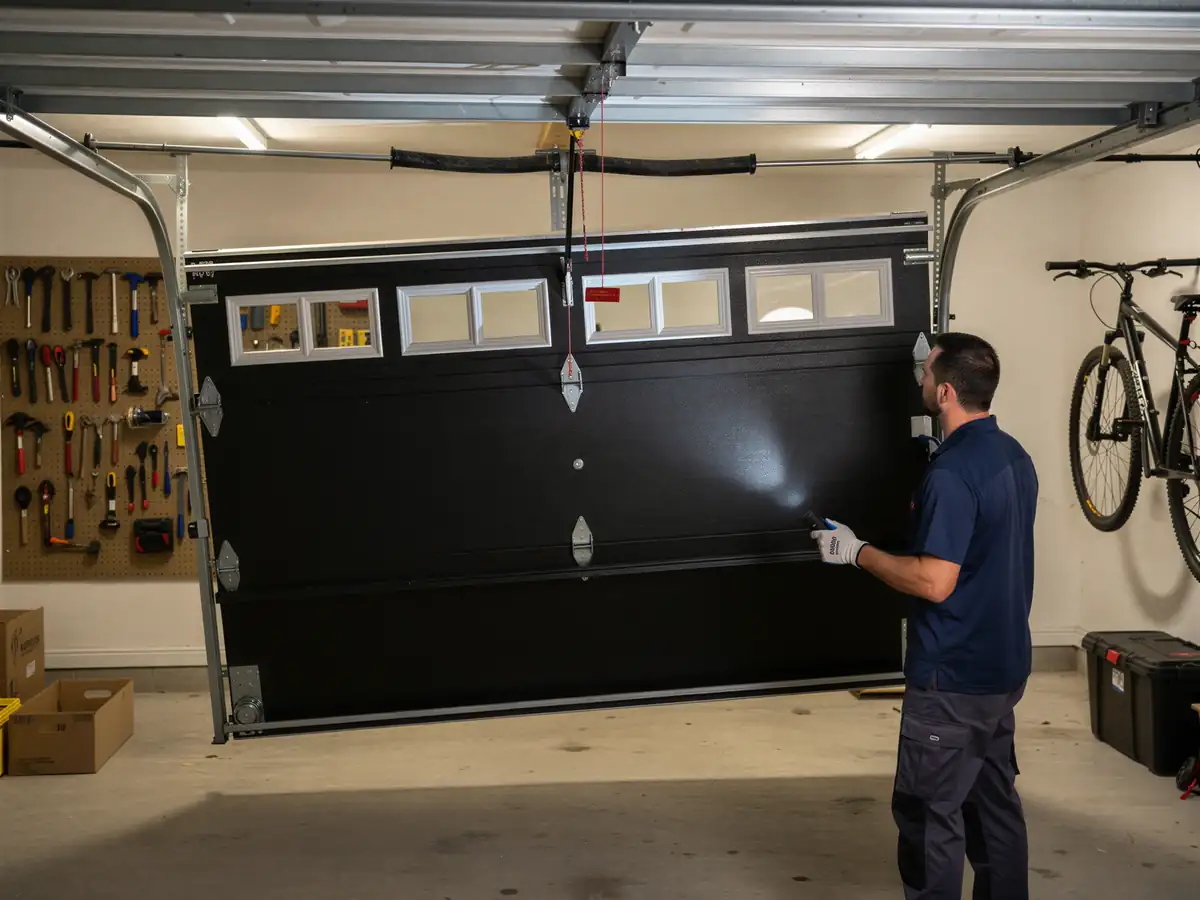
Sometimes it's one roller catching, and the door still moves, just roughly. Sometimes the whole panel has pulled sideways and the door is stuck wherever it was when it jumped. Either way, running the opener again after the first grinding sound is the single most common way a simple roller problem turns into a bent track and a cracked stile. If it's making that noise, stop and call rather than cycle it a few more times to see if it works itself out.
What You Pay
Median household income in Great Falls runs around $250,001
Well above the service area's overall median of $137,878. That gap matters for the repair-versus-replace call: at this income level, homeowners here more often choose to replace a door outright once the track damage is paired with cosmetic wear, rather than spend on a mid-life repair and plan to replace again in a few years anyway. In lower-income pockets of the service area, the math usually favors stretching the repair as long as the door will take it.
An off-track repair by itself
Realigning the track, replacing a roller or a hinge - is the cheaper end of the work we do on these doors. It climbs once a bent track section needs full replacement, and climbs again if the opener's travel limits need resetting afterward. We'll give you the actual number after we've looked at what's bent and what's just loose, not before.