How Long You Are Without the Door
We run this call from Arlington, about 4 miles out
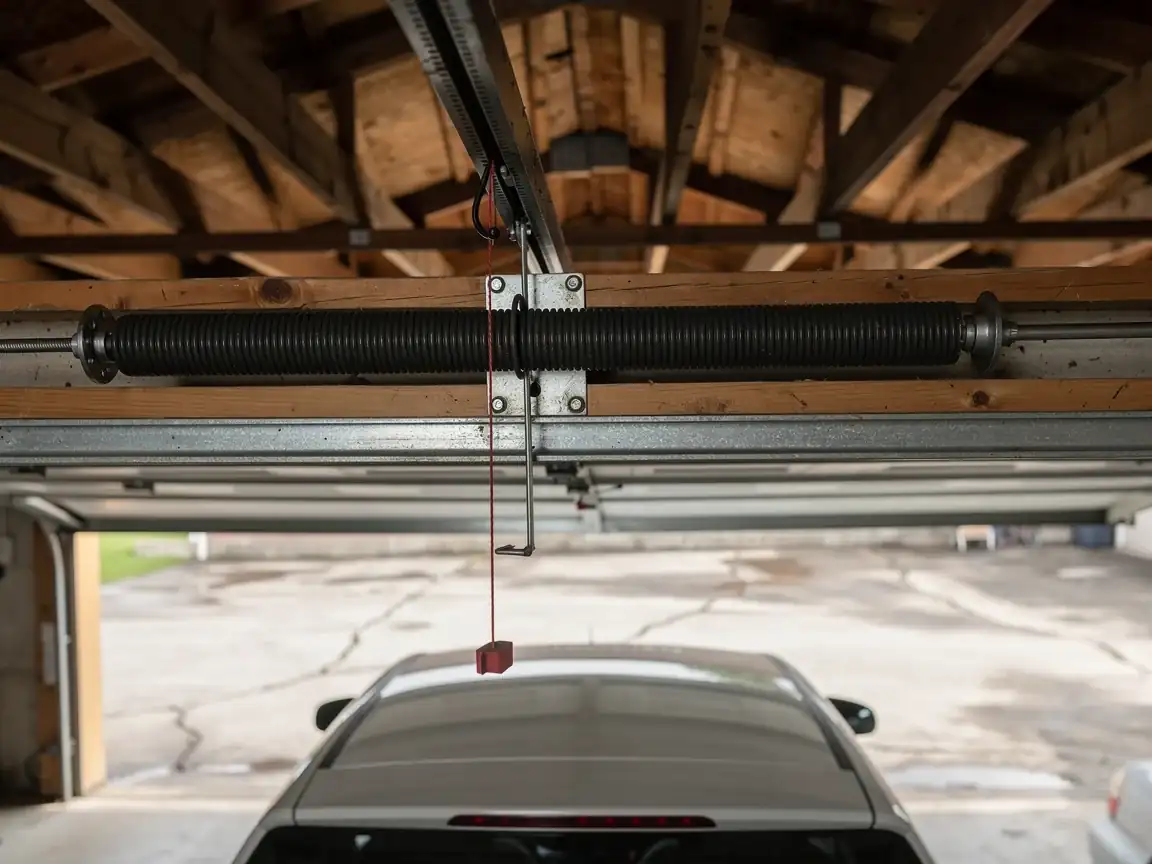
So we don't pretend to have a crew sitting in Falls Church waiting on the phone to ring. What we can tell you is that most opener failures don't leave you locked out. If the motor dies but the trolley disengages, you pull the release cord and lift the door by hand until we get there. That's not true of every failure - a seized gear can jam the trolley on the track, and a dead logic board sometimes won't release the carriage at all - but it covers more cases than people expect.
- 4 miles
Houses in Falls Church went up mostly around 1971
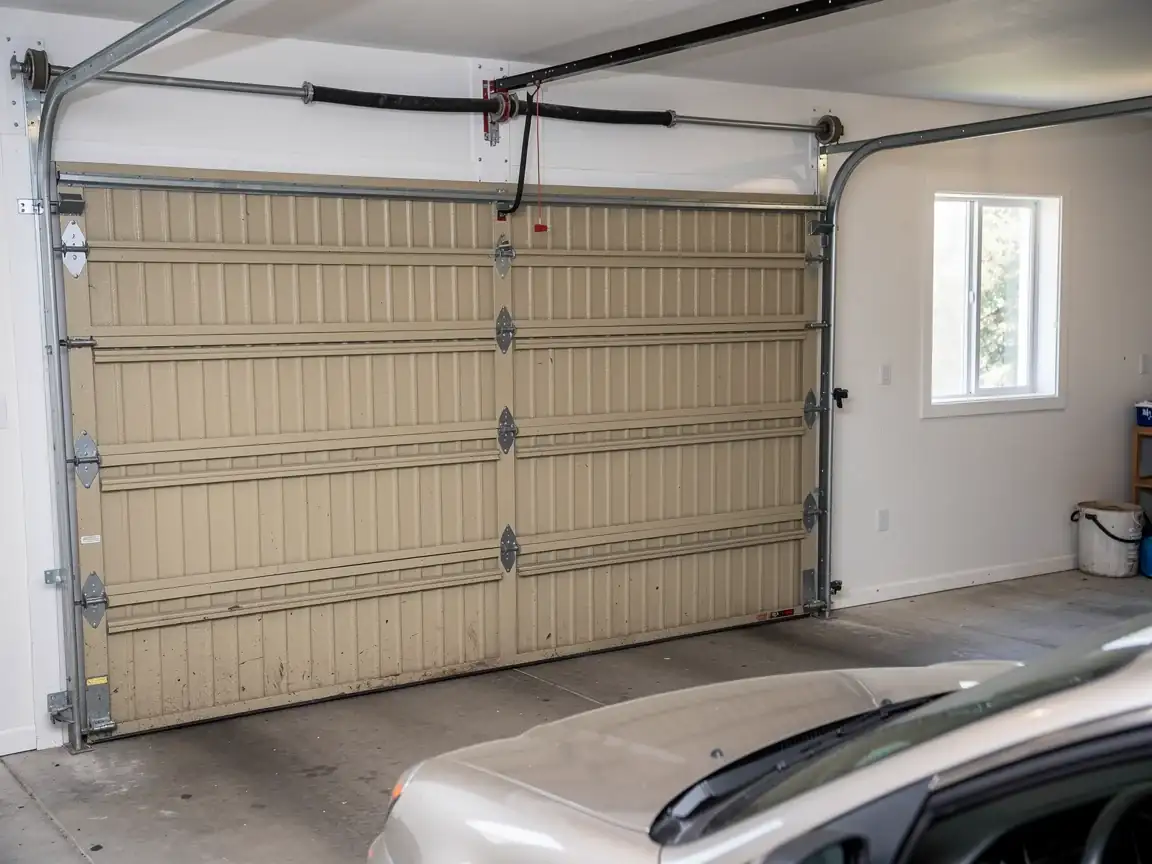
Which matters here more than the mileage does. A door and opener installed, or last replaced, in that era is well past any reasonable service life, and a lot of what we see is a second or third-generation opener bolted onto 50-year-old track and rail that was never squared off for it. That mismatch is what turns a simple motor swap into a longer job.
We'll tell you on the phone
Before we drive out, whether what you're describing sounds like something we can likely finish same visit or something that needs a part ordered first.
How It Shows Up
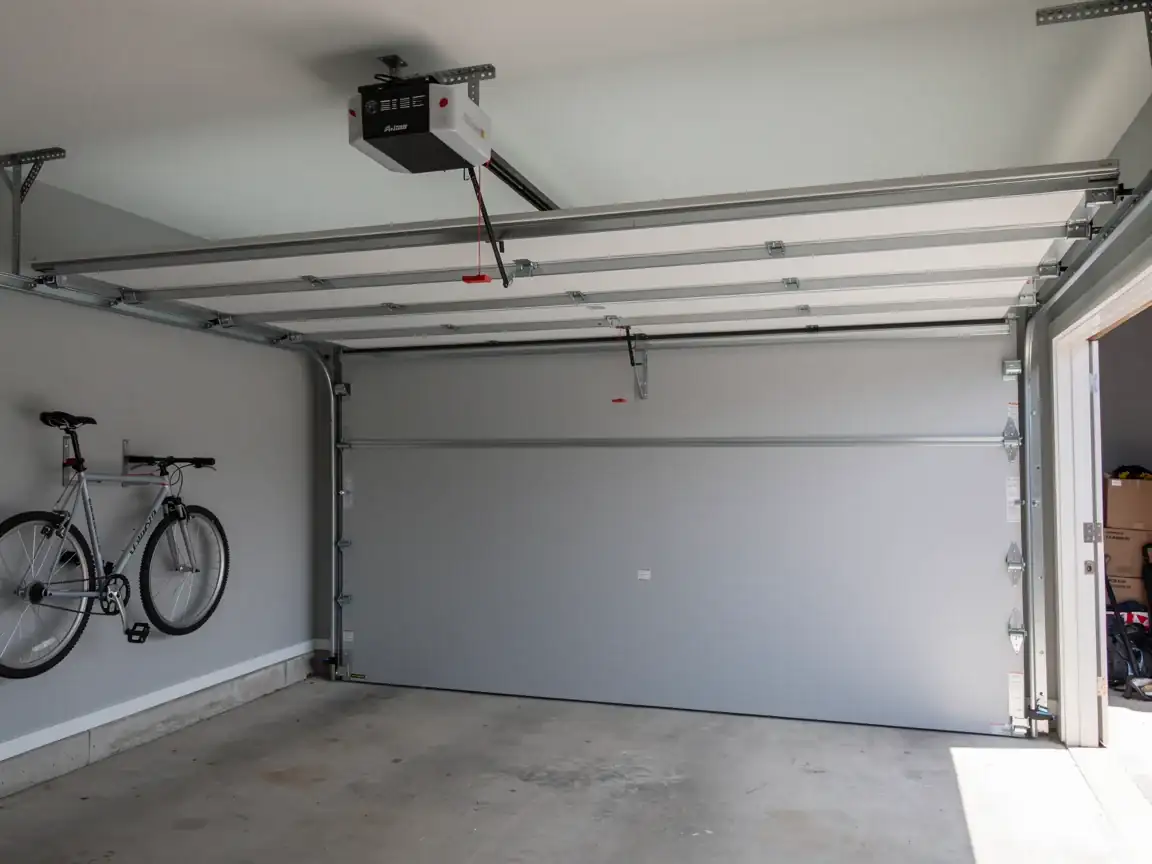
The motor hums but the door doesn't move - that's a stripped gear or a broken drive gear sprocket, one of the most common opener failures we see on units installed as retrofits to older Falls Church doors. The light blinks a set number of times and the door reverses before it closes - that's usually the safety sensors, knocked out of alignment by seasonal ground shift, which happens more in a climate that freezes and thaws than one that doesn't.
Sometimes the remote works from across the garage but not from the driveway, which points to a weak receiver board rather than the remote battery - people replace the battery three times before they call us, which is a reasonable thing to try but rarely fixes it.
And sometimes nothing happens at all: no hum, no light, nothing. That's either the circuit board or the wall switch, and on a chain-drive unit from the 1980s or 1990s - still common on 1971-era houses that got a first opener installed well after the house itself was built - that board usually isn't the kind you can find at a hardware store on a Saturday.
What Can Go Wrong
The short list we actually see on these calls: a stripped nylon drive gear inside the motor housing, which is the single most common failure on chain and screw-drive openers once they pass a certain age. A capacitor that's given out, which on a cold morning can mean the motor tries to start, strains, and trips its own thermal overload before it ever moves the door. Logic boards that corrode at the connector pins from years of garage humidity and temperature swings - not dramatic, just slow failure that shows up as
Why It Happens Here
Falls Church's housing stock centers on 1971
Squarely inside the 1940-2001 range that runs across this whole service area, and that era produced garages built for one-piece or early sectional doors with openers added later, often more than once. The hardware underneath the opener - the track, the rail bracket, the header clearance - wasn't always built to the spec a modern opener assumes, and that's the detail that turns a straightforward swap into a bracket-and-rail job.
The climate band here runs cold and severe
And that matters for openers specifically: capacitors and circuit boards fail at a higher rate through repeated freeze-thaw cycles than they would somewhere milder, and we see a real jump in board and sensor calls through the coldest stretch of the year.
One more local number worth naming
Median household income here runs close to $154,734, well above the roughly $137,878 median across the wider service area. In practice that shows up as more Falls Church homeowners choosing to replace an aging chain-drive unit with a belt-drive or battery-backup model outright rather than patching the old one - which changes the kind of call we get here compared to older, lower-income stretches of the territory.
Stocked Parts
We carry the parts that fail most often on the trucks: drive gears and sprockets for the major chain and belt-drive brands, standard safety sensor pairs, remotes and keypads, and trolley and carriage assemblies for the common rail types. Capacitors for most residential motor sizes ride along too, since that's a frequent cold-weather fix.
What we don't stock is every logic board for every brand and vintage - some of the boards that show up in older Falls Church installs are for openers that have been out of production for years, and those get special-ordered once we've confirmed that's actually the failure. We'll tell you straight if a board needs to be ordered rather than quote you a same-visit fix we can't deliver. On some of the oldest units, replacing the whole opener costs less and holds up longer than hunting down a discontinued board, and we'll say so rather than chase the repair for its own sake.
Booking a Visit
Call and describe what the opener is doing - hums but doesn't move, blinks and reverses, dead silent, remote drops out at distance - and we can usually narrow it down before the truck leaves Arlington for the 4 miles into Falls Church. Have the brand and, if you can find it, the model number from the sticker on the motor housing; that alone tells us whether the drive gear or board we need is one we're already carrying.
If you're not sure whether this is an opener problem or a spring or track problem, that's fine - tell us what you see and we'll ask the questions that sort it out before we schedule anything. See our coverage near Falls Church for the rest of the area we run from Arlington, or check opener repair out of Arlington if you want the full rundown on how we handle this repair generally.